- Retro Swap
- Posts
- 30 Years Later, Yoshi’s Island Still Looks Better Than Most Modern Platformers (And We Need To Talk About It)
30 Years Later, Yoshi’s Island Still Looks Better Than Most Modern Platformers (And We Need To Talk About It)
PLUS: The 16-Bit Masterpiece That Broke the World (And Our Hearts)
Fun Fact: Did you know that Daggerfall (1996), the second Elder Scrolls game, has a map roughly the size of Great Britain (approx. 161,000 square kilometers).
In today’s email:
30 Years Later, Yoshi’s Island Still Looks Better Than Most Modern Platformers (And We Need To Talk About It)
Let’s be real: in 1995, the world was obsessed with "pre-rendered 3D." Everything had to look like Donkey Kong Country or it wasn't "next-gen." Then came Super Mario World 2: Yoshi’s Island, a game that looked like it was colored with a box of Crayolas and a heavy dose of rebellion. While the rest of the industry was racing toward a jagged, low-poly future, Nintendo gave us a masterpiece that feels as fresh in 2026 as it did on the SNES. It didn't just break the Mario mold; it ate the mold and turned it into an egg.
The Art of Rebellion: Shigeru Miyamoto vs. The Trend
The story of Yoshi’s Island is legendary among dev circles. When Nintendo’s marketing suits pushed for the "pre-rendered" look to compete with Rare’s 3D-style sprites, Shigeru Miyamoto pivoted in the opposite direction. He went hand-drawn. By leaning into a soft, sketchbook aesthetic, the team created a timeless look that literally cannot age.
But don't let the coloring-book vibes fool you. Under the hood, this was a technical powerhouse. It utilized the Super FX 2 chip, allowing the SNES to handle massive sprites, world-bending rotations, and those trippy "Touch Fuzzy, Get Dizzy" effects that still feel like a fever dream.
More Than Just a Prequel
Despite the "Super Mario World 2" branding in the West—a move mostly made to capitalize on the success of the SNES launch title—this was a standalone beast. We moved from the precision platforming of Mario to the momentum-heavy, egg-tossing physics of Yoshi.
It introduced mechanics that are now staples of the genre:
The Flutter Jump: Saving your life from a botched landing since '95.
Egg Aiming: The first time a platformer felt like a twin-stick shooter (sort of).
The Ground Pound: Now a Mario staple, but it was born on the Island.
And then, there’s Baby Mario. Whether you find his siren-like cry endearing or the most stressful sound in digital history, it changed the stakes. You weren't just playing for your own health bar; you were playing to protect a screaming toddler from Kamek’s minions.
The Yoshi’s Island Cheat Sheet
Developer: Nintendo EAD (Produced by Shigeru Miyamoto)
Release Dates: * Japan: August 5, 1995 (Super Mario: Yoshi's Island)
North America: October 4, 1995
The Tech: Powered by the Super FX 2 chip (the same tech’s predecessor powered Star Fox).
Regional Quirk: In Japan, the game wasn't titled "Super Mario World 2." It was viewed as the start of its own "Yoshi" series, a distinction that makes more sense given the gameplay.
Must-Play Levels: * 1-7: Touch Fuzzy, Get Dizzy (The ultimate SNES tech flex).
4-1: Go! Go! Mario!! (Peak level design and music).
6-8: King Bowser's Castle (The giant Bowser fight is still one of the best final boss reveals ever).
Why It Still Matters
In an era of hyper-realistic 4K textures, Yoshi’s Island reminds us that style beats fidelity every single time. It’s a game that prioritizes joy, experimentation, and a little bit of chaos. Whether you’re playing on original hardware or a modern emulator, the colors pop, the music slaps, and the physics feel incredibly tight.
Alright, let's settle this once and for all: Does the Baby Mario crying sound effect give you genuine anxiety, or are we just being dramatic? Hit reply and tell us your most "clutch" save or your most heartbreaking "Kamek took the baby" moment!
The 16-Bit Masterpiece That Broke the World (And Our Hearts)
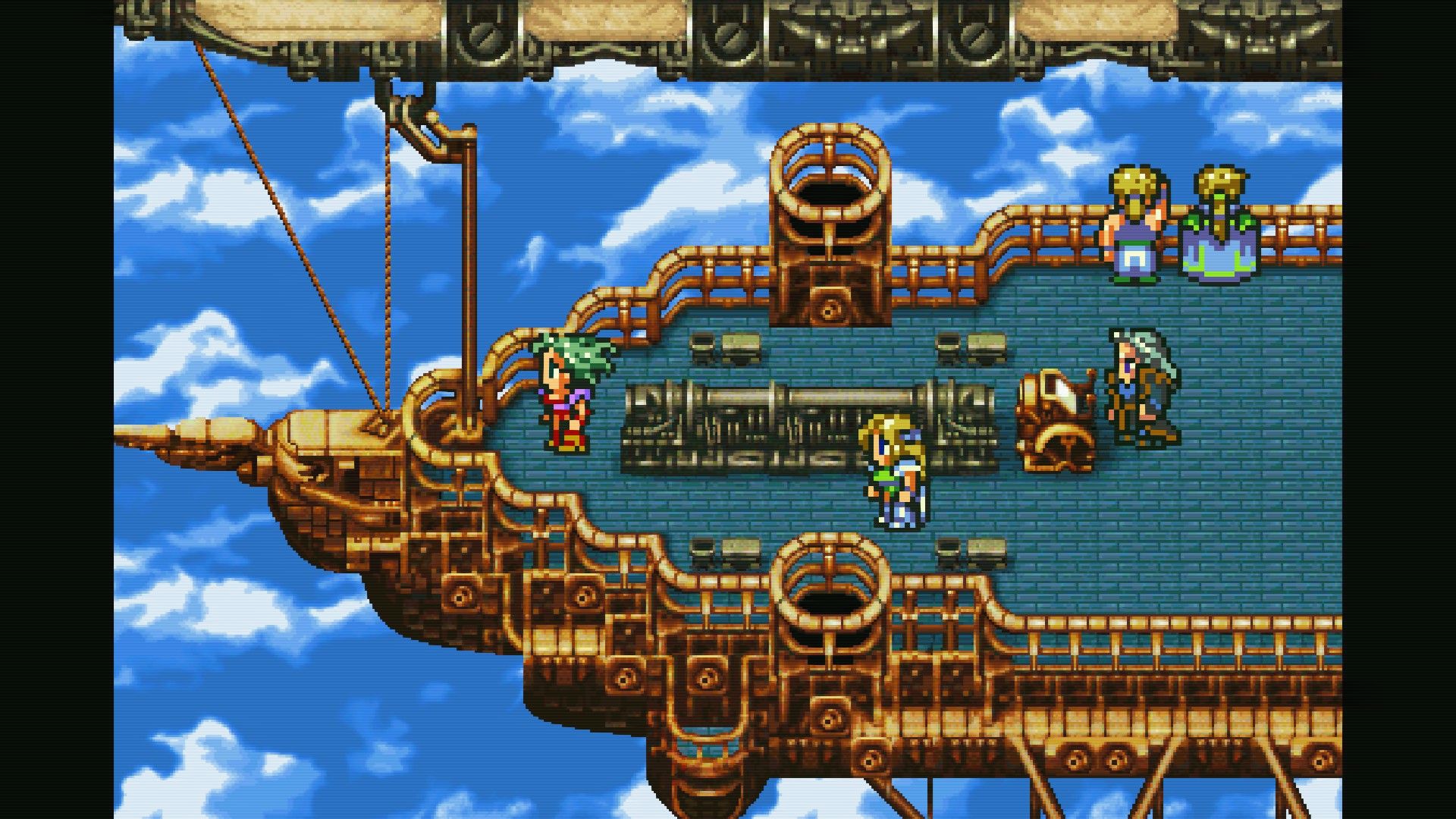
Remember the first time you saw those Magitek armors trudging through the snow toward Narshe? That haunting Uematsu score chilling your bones while the Mode 7 credits drifted past? In 1994, we didn't just play Final Fantasy VI—we lived it. It was the moment the JRPG grew up, trading princess-rescues for operatic tragedy, nihilistic villains, and a cast so deep it made every other game on the shelf look like a Saturday morning cartoon. It wasn't just a game; it was a cultural reset that proved pixels could make us cry.
The "Final Fantasy III" Identity Crisis
Let’s address the Moogle in the room: back in ’94, the box art told us this was Final Fantasy III. For us North American fans, the math was a mess because Square skipped a few entries in the localization process. We didn't care. Whether you called it III or VI, this was the pinnacle of the SNES era. It pushed the hardware to its absolute breaking point, utilizing Mode 7 graphics to give us a sprawling, pseudo-3D world map that felt impossibly vast.
An Ensemble Cast with No Equal
While most games gave you one hero, FFVI gave you fourteen. From Terra’s haunting search for her humanity to Celes’s legendary opera performance, every character carried weight. And then there was Kefka Palazzo. Before the "pretty boy" villains of the 32-bit era took over, we had a clown in face paint who didn't want to rule the world—he wanted to watch it burn. Unlike every other villain who gets thwarted at the eleven-hour mark, Kefka actually won.
The Mid-Game Gut Punch: The World of Ruin
Nothing in gaming history compares to the sheer shock of the Floating Continent. We all thought we were going to save the world in the final act. Instead, the world literally tore apart. Waking up as Celes on a solitary island, surrounded by a dying world, remains one of the most emotionally resonant moments in the medium. It turned a quest for victory into a desperate scramble for hope, forcing us to find our scattered friends in a wasteland where the music had turned from heroic to heartbroken.
🕹️ The Quick-Hit Cheat Sheet
Developer Pedigree: Directed by Yoshinori Kitase and Hiroyuki Ito, with the legendary Hironobu Sakaguchi producing.
The Art: Features the iconic, ethereal character designs of Yoshitaka Amano.
Release Date: October 11, 1994 (North America).
Standout Feature: The Magicite System, allowing total customization of your party’s spells and stat growth.
Legacy: Consistently ranked as one of the greatest RPGs of all time, often rivaling FFVII for the top spot.
Still the Gold Standard
Decades later, the sprite work still holds up, the soundtrack is still a masterpiece, and the story of a ragtag group of rebels standing against a god-tier nihilist feels more poignant than ever. It was the peak of the 2D era, a "lightning-in-a-bottle" moment where technology and storytelling hit a perfect, beautiful resonance.
Now it's your turn: Who was in your permanent end-game party? Are you Team Sabin (Suplexing trains forever!) or Team Edgar? Hit reply and let’s settle the "Best FF" debate once and for all.
16-Bits Never Looked So 3D: How Donkey Kong Country Saved the SNES and Defined a Generation
It’s November 1994. The playground rumors are swirling about the "Next-Gen" power of the PlayStation and Saturn, and your trusty Super Nintendo is starting to look a little long in the tooth. Then, you walk into a Babbages or a Blockbuster, look at a CRT television, and see it: Donkey Kong Country. Your brain literally couldn't process it. We were used to flat pixels and charming sprites, but here was something that looked like a high-end CGI movie running on a console powered by 1990 tech. It was glossy, it was fluid, and it looked like you could reach out and grab the fur on DK’s back. It wasn't just a game; it was a 16-bit miracle that told the 32-bit newcomers to sit down and wait their turn.
The Wizards of Twycross
How did they do it? The secret sauce was a British studio called Rareware (now Rare) and a suite of massive, wildly expensive Silicon Graphics (SGI) workstations. By pre-rendering high-end 3D models and compressing them into sprites that the SNES could actually read, Rare bypassed the hardware limitations of the era. It was a technical "magic trick" of the highest order. While the competition was bragging about polygons, Donkey Kong was delivering a lush, photorealistic jungle that made everything else look like a coloring book.
The Buddy System and the Minecart From Hell
But DKC wasn’t just a pretty face. It introduced the Tag-Team mechanic, letting us swap between the heavy-hitting Donkey and the agile Diddy on the fly—essentially giving you a "spare tire" for those brutal platforming sections. And speaking of brutal, we have to talk about Minecart Carnage. It’s the level that defined 90s gaming stress: a high-speed, twitch-reflex gauntlet that tested your soul. Between the perfect physics of the barrel cannons and the dopamine hit of finding a hidden "KONG" letter, the gameplay loop was—and still is—absolute perfection.
A Symphony in the Jungle
We can’t talk about the vibe without bowing down to David Wise. The soundtrack didn't just feature "game tunes"; it featured atmospheric masterpieces. Aquatic Ambiance turned a standard underwater level into a literal religious experience, while Gang-Plank Galleon started as a sea shanty and ended as a heavy metal banger. Wise proved that the SNES sound chip could produce music that felt cinematic, moody, and lightyears ahead of the "bleeps and bloops" of the 8-bit era.
💾 THE SAVE FILE
Developer: Rare
Release Date: November 21, 1994
Legacy Fact: It sold over 9 million copies, becoming the third best-selling SNES game ever and proving that 2D platforming still had massive commercial teeth.
Pro-Tip: Want a quick 50 lives? At the File Select screen, highlight "Erase Data," hold Select, and press B, A, R, R, E, L. You're welcome.
The Kong Who Refused to Quit
By late '94, the "Console Wars" were at a fever pitch. The 32-bit revolution was supposed to make the SNES irrelevant, but Donkey Kong Country changed the narrative. It extended the life of the console by years, proving that art style and tight mechanics will always beat raw specs. It was a victory lap for the 16-bit era and a reminder that Nintendo and Rare were the undisputed kings of the jungle.
Now, let’s settle the debate in the comments: Are you a Donkey Kong purist for the extra muscle, or are you Team Diddy for that sweet, sweet cartwheel jump? And more importantly—which level still gives you nightmares? (We know it's Stop & Go Station). Hit reply and let us know!
Reply