- Retro Swap
- Posts
- Is the F-Zero Spiritual Successor Finally Here? Why Star Racer is the Retro Revival You’ve Been Craving
Is the F-Zero Spiritual Successor Finally Here? Why Star Racer is the Retro Revival You’ve Been Craving
PLUS: Is Golden Sun Still the Greatest Handheld RPG Ever Made? (Spoilers: Yes.)
In partnership with

Fun Fact: Did you know that while the curse is famous now, John Madden didn't actually want to make the game unless it featured 11-on-11 players, which delayed the original release because the hardware struggled to handle that many athletes.
In today’s email:
Men, Say Goodbye to Eyebags, Dark Spots & Wrinkles

Reduce eyebags, dark spots and wrinkles with the first of its kind anti-aging solution for men.
Based on advanced dermatological research, Particle Face Cream helps keep your skin healthy and youthful, ensuring you look and feel your best every day.
Get 20% off and free shipping now with the exclusive promo code BH20!

From Pixels to Polygons: Why This Visual Guide is the Ultimate Power Trip Through Gaming History
If you’ve ever argued about whether the Blast Processing of the Genesis actually beat the SNES Mode 7, or if you still have the startup sound of the original PlayStation burned into your soul, listen up. We aren’t just looking at a book; we’re looking at a time machine. Leaps + Bounds: A Visual Guide to Nine Console Generations is the definitive autopsy of the machines that raised us, and it’s a gorgeous, neon-soaked reminder of how far we’ve come from the Magnavox Odyssey to the behemoths under our TVs today.
More Than Just a Coffee Table Decoration
Most gaming books are content to show you a blurry photo of a controller and call it a day. Leaps + Bounds feels different. It treats a motherboard like a work of art. This guide is unique because it doesn’t just focus on the "winners" like the PS2 or the Wii; it gives the same high-definition love to the oddities, the failures, and the regional legends that paved the way for the 4K/120Hz world we live in now.

Nine Generations of Innovation (and Chaos)
The Early Wild West (Gens 1-3)
The guide kicks off by reminding us that before Mario was a household name, the industry was a chaotic scramble of dedicated pong machines. It captures the moment the Famicom (that’s the NES to us Westerners) saved the industry from its 1983 collapse. The book highlights how the Japanese Famicom featured hardwired controllers and a top-loading slot, a stark contrast to the "VCR-style" front-loader we got in the States to trick parents into thinking it was an appliance, not a toy.
The Great Bit Wars (Gens 4-6)
This is where the nostalgia hits like a blue shell. The visual breakdown of the 16-bit era transition into the 3D revolution is breathtaking. You get a side-by-side look at the Sega Saturn’s complex internal architecture—a beast so difficult to program for that it ultimately cost Sega the crown—compared to the streamlined efficiency of the Sony PlayStation.
The Modern Titan Era (Gens 7-9)
Moving into the HD era and beyond, the guide focuses on the "Leaps" that weren't just about graphics, but about connectivity. It tracks the evolution of Xbox Live and the Wii’s motion control craze, all the way up to the silicon-shortage-defying launch of the PS5 and Xbox Series X. It’s a fascinating look at how "gameplay mechanics" moved from pressing a button to swinging your arm, and eventually, to haptic feedback that lets you feel raindrops in your palms.
The Nerd’s Cheat Sheet
The "Bread Box" Origin: Did you know the original Commodore 64 design was nicknamed the "bread box" due to its chunky, beige profile? The guide features a pristine layout of its internals.
Regional Rarity: It spotlights the PC Engine (TurboGrafx-16), noting how its HuCard format was revolutionary in Japan but struggled to find its footing in North America due to strict licensing.
The 1.5 Generation: The guide includes the "half-steps," like the Sega CD and 32X, proving that mid-gen refreshes aren't a new PS5 Pro phenomenon.
Developer Secret: Features insights into how Nintendo’s Gunpei Yokoi used "lateral thinking with withered technology" to make the Game Boy a battery-life king compared to the color-screened (but battery-hungry) Game Gear.
The Final Verdict
Whether you're a hardcore historian or someone who just wants to remember what it felt like to unwrap a N64 on Christmas morning, Leaps + Bounds is an essential pickup. It’s a rare look at the physicality of gaming in an increasingly digital world.
Bottom line: Buy it for the photos, stay for the deep-cut trivia that will make you the smartest person in your next Discord hang.
What was your first-ever console "leap"?
Is Golden Sun Still the Greatest Handheld RPG Ever Made? (Spoilers: Yes.)
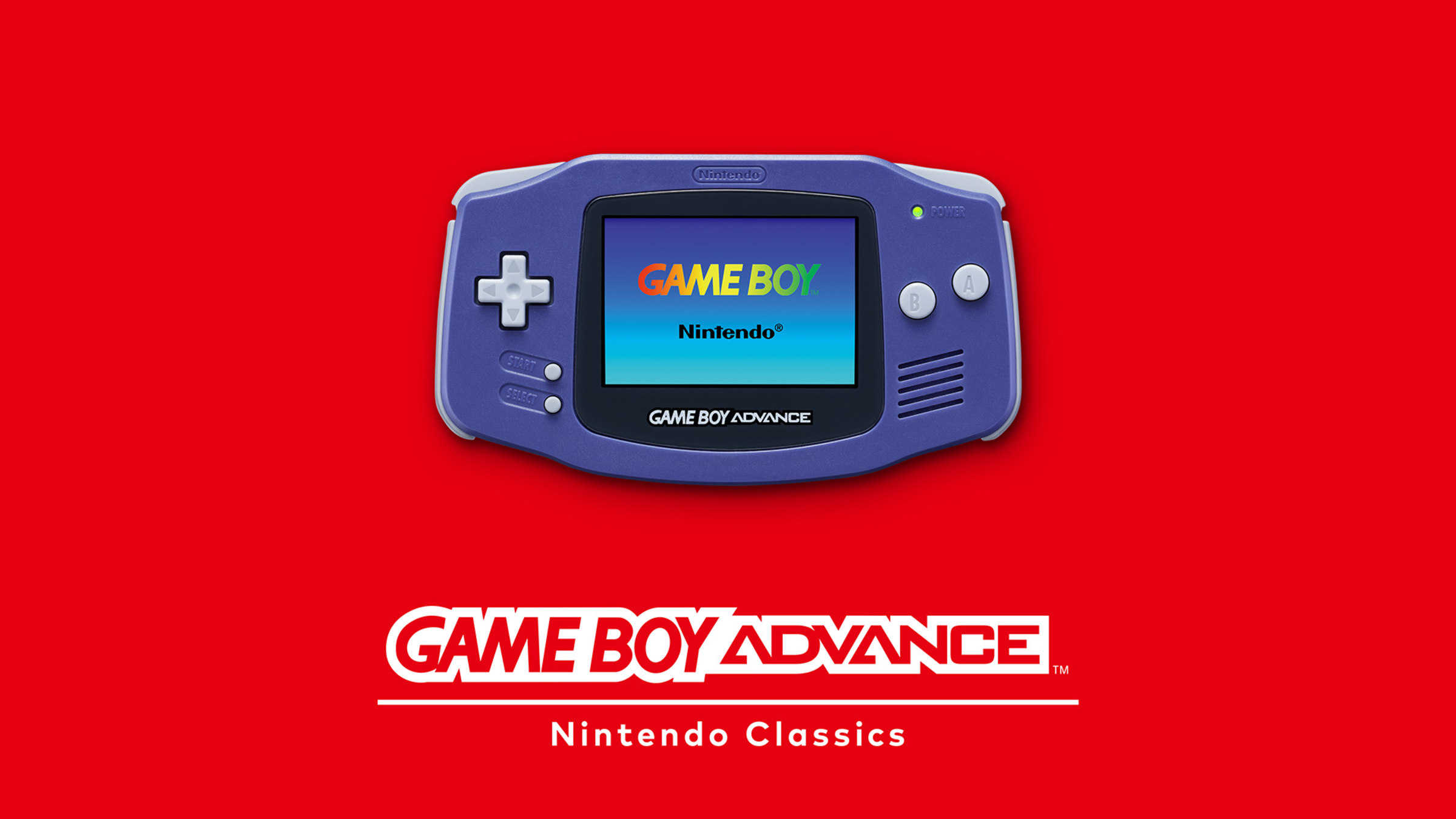
Before Pokémon fully conquered the world and Final Fantasy went all Hollywood, a little purple cartridge arrived on the Game Boy Advance that felt… different. It wasn't just another dungeon crawler; it was an event.
If you grew up with a GBA, you know the feeling. You popped that cartridge in, saw the iconic camelot logo, and were immediately swept away by a story that felt epic in a way handheld games just weren't supposed to be. Golden Sun wasn't just an RPG on a handheld; it was a triple-A epic in your pocket.
The Camelot Magic: From Mario Tennis to Psynergy Masterclass
Let's talk about the masterminds behind this magic. Camelot Software Planning. Yes, the same studio that gave us Shining Force (legends!) and, hilariously, Mario Tennis and Mario Golf. This bizarre resume is actually the secret sauce.
They brought their incredible tactical RPG knowledge from Shining Force and mixed it with the accessible, polish-first mentality they honed working with Nintendo's mascots. The result was a game that looked better than most early PlayStation games, with a battle system that was surprisingly deep yet intuitive.
Psynergy: More Than Just Magic
Forget boring "Fire 1" and "Heal 2." Golden Sun's magic system, Psynergy, was the game's heartbeat.
It wasn't just for blasting fools in combat (though casting "Ragnarok" never got old). Psynergy was your main tool for interacting with Weyard. You'd "Move" pillars, "Whirlwind" away leaves to find hidden paths, and "Reveal" invisible objects.
It turned the entire world into a giant Zelda-style puzzle box, blending exploration and classic RPG combat in a way that felt fresh and incredibly satisfying.
The Djinn: Collect 'Em All (and Smash with 'Em)
But the real game-changer was the Djinn system. These adorable elemental spirits were scattered throughout the world, and finding them was half the fun.
Assigning them to different characters wasn't just about unlocking powerful summons (which, let's be honest, were breathtaking pseudo-3D spectacles). It completely altered their class, stats, and available Psynergy. A character who was your primary healer one minute could be a powerhouse melee damage dealer the next, just by mixing and matching Djinn.
It offered a level of customization that few games, handheld or otherwise, could match.
Golden Sun Trivia & Stats
Developer: Camelot Software Planning (The Shining Force and Mario Sports team!)
Release Dates (Original GBA):
Japan: August 1, 2001
North America: November 11, 2001
Europe: February 22, 2002
The Big Split: Golden Sun and its sequel, Golden Sun: The Lost Age, were originally intended to be a single, massive game! The GBA cartridge just couldn't hold it all.
Password Transfer: The only way to get your hard-earned characters, items, and, crucially, your Djinn data from the first game to the sequel was to use an incredibly complex, 260-character password system. We don't miss that part.
Standout Feature: The incredibly detailed pixel art and pseudo-3D battle backgrounds were absolute wizardsry for the Game Boy Advance.
Where to Play Now: If you're missing this masterpiece, both Golden Sun and Golden Sun: The Lost Age are currently available as part of the Nintendo Switch Online + Expansion Pack. It's the perfect time for a replay (without the password hassle)!
A Cliffhanger for the Ages
Golden Sun wasn't just special; it was ambitious. It told a story that was too big for one game, ending on a genuine cliffhanger that left fans absolutely desperate for the sequel.
In 2026, we look back and appreciate it for what it was: a high-water mark for handheld gaming. It proved that "small screen" didn't mean "small ideas." It showed that with enough passion and clever programming, you could create a truly unforgettable world, all on a device that took two AA batteries.
The Verdict
So, is Golden Sun still the greatest handheld RPG ever made? For many of us, the answer is a resounding 'Yes'. It's a game that defined an era and still holds up as a masterclass in design, presentation, and pure, unfiltered charm.
Your Turn!
What’s your single favorite memory of Golden Sun? Was it finding a super-hidden Djinn? That mind-blowing final boss fight? Or the absolute pain of typing in that 260-character password?
Is the F-Zero Spiritual Successor Finally Here? Why Star Racer is the Retro Revival You’ve Been Craving
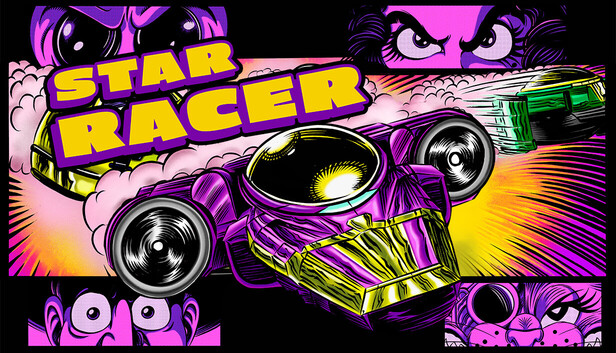
If you’ve spent the last two decades staring at a Nintendo Direct waiting for Captain Falcon to get out of retirement, your wait just ended—though not where you expected. Star Racer, the pixel-perfect combat racer from Whatnot Games, has officially blasted out of Early Access (July 2025) and into the hearts of retro speed-demons everywhere. It’s a neon-soaked, 16-bit love letter that doesn't just mimic the classics; it straps a rocket engine to them and dares you to keep up.
The Need for (Intergalactic) Speed
What makes Star Racer a standout in a crowded indie market isn't just the nostalgia—it’s the hybrid gameplay. Imagine the breakneck, Mode-7 style drifting of F-Zero suddenly colliding with the aerial dogfighting of Star Fox. One minute you’re scraping paint on a gravity-defying circuit, and the next, your vehicle transforms for a "Flight Zone," where you’re barrel-rolling through the clouds and firing lasers to thin out the pack.
It’s a "risk vs. reward" masterclass. You have a single energy bar that doubles as your health and your boost. Burn too much to get ahead, and one stray mine or a shunt from a rival like Thrash Whiplash will send you to a pixelated grave.
A Universe of Content (and Customization)
While the game captures that "tough-as-nails" 90s arcade difficulty, it’s packed with modern hooks that keep the "just one more race" loop alive:
The Track Editor: This is the game’s secret weapon. It’s the same tool the developers used, allowing you to build, share, and master death-defying circuits.
Legendary Tunes: The soundtrack features tracks from Grant Kirkhope (Banjo-Kazooie) and Mason Lieberman, providing a pulse-pounding backdrop that fits the 80s Saturday-morning cartoon aesthetic.
Local Mayhem: In an era of online-only play, Star Racer stays true to its roots with 4-player local split-screen.
Launch Logistics & Regional Notes
Currently, Star Racer is a PC and macOS exclusive (available via Steam), though the community is clamoring for a Switch port. For those worried about regional locks: the game has a global digital release, but physical collectors should keep their eyes on boutique publishers for potential limited runs. Performance-wise, it’s incredibly light, meaning you can run this at a blistering 60fps on almost any modern laptop or Steam Deck.
The Star Racer Breakdown
Developer: Whatnot Games
The Vibe: F-Zero meets SWAT Kats. Pure 90s adrenaline.
Pro Tip: Use a controller. While it supports keyboard, the "weight" of the drifts feels significantly more natural on an analog stick.
Trivia: The game's art style was heavily inspired by Biker Mice from Mars and Sonic the Hedgehog (SatAM).
Standout Feature: "Event Races" introduce wild variables like lava-filled tracks or "Break the Targets" challenges that flip the racing script.
Think you’ve got the reflexes to survive the Star Racer circuit, or are you going to end up as space dust? Let us know your fastest lap times in the comments!
Reply