- Retro Swap
- Posts
- Pixels to Pages Review: A Love Letter to the Golden Age of Gaming Mags
Pixels to Pages Review: A Love Letter to the Golden Age of Gaming Mags
PLUS: Robin Hood Returns: Why Sherwood Is the 8-Bit Folk Hero Adventure We Didn't Know We Needed
In partnership with

Fun Fact: Did you know that the PlayStation 2 Startup Screen Was Not Random? The iconic white towers that appeared during the PS2’s boot sequence weren't just a random visualization. The console was actually reading your memory card in real-time. The number of towers represented the number of save files you had, and their height corresponded to how long you had played each game.
In today’s email:
Banish bad ads for good

Your site, your ad choices.
Don’t let intrusive ads ruin the experience for the audience you've worked hard to build.
With Google AdSense, you can ensure only the ads you want appear on your site, making it the strongest and most compelling option.
Don’t just take our word for it. DIY Eule, one of Germany’s largest sewing content creators says, “With Google AdSense, I can customize the placement, amount, and layout of ads on my site.”
Google AdSense gives you full control to customize exactly where you want ads—and where you don't. Use the powerful controls to designate ad-free zones, ensuring a positive user experience.
Pixels to Pages Review: A Love Letter to the Golden Age of Gaming Mags
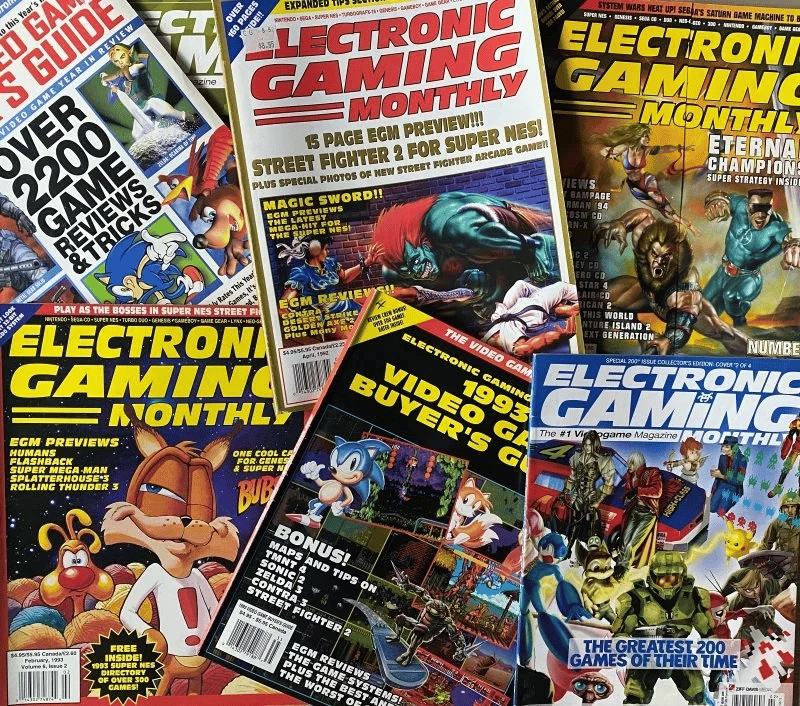
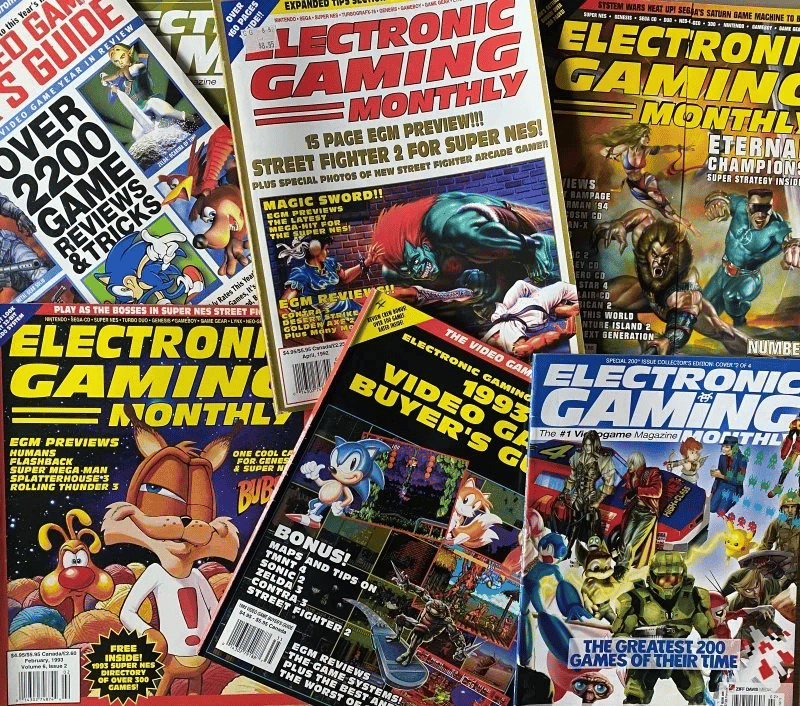
If you close your eyes and focus, you can probably still smell it. That distinct, glossy scent of fresh ink and cheap paper stock. For a generation of gamers, that smell meant one thing: the new issue of Electronic Gaming Monthly had just landed in the mailbox.
In an era before refresh buttons and Twitter leaks, EGM was the internet. It was the sacred text of 16-bit secrets, the arbiter of "Review Crew" scores, and the home of the mysterious Sushi-X. If you’ve been chasing that specific hit of nostalgia, stop what you’re doing. The new YouTube documentary "Pixels to Pages" isn't just a history lesson; it’s a time machine.
A massive collaboration between retro tech heavyweights Game Sack and My Life in Gaming, "Pixels to Pages" is a 76-minute love letter to the magazine that defined the '90s console wars. And honestly? It’s about time someone got this story right.
The Dream Team Up
We’ve seen plenty of gaming docs, but the pedigree here is special. Directed and edited by Joe from Game Sack with the production polish we expect from My Life in Gaming, the film balances deep archival research with that specific, irreverent humor that EGM itself was famous for.
The documentary manages to track down the titans of the masthead. We’re talking face-to-face interviews with former Editor-in-Chief Ed Semrad, the late-night warrior Martin Alessi, and Managing Editor Ken Williams. Hearing Semrad explain how he used to capture screenshots for games that didn't even exist yet (or were vastly different from the final release) is worth the runtime alone. It validates every playground argument you ever had about why the screenshots on the back of the box looked different than the game you rented.
Review Crew and Rumor Mills
The film shines brightest when it digs into the culture of Sendai Publishing. It covers the chaotic origins of the magazine, its tight ties to the U.S. National Video Game Team, and the genesis of the Review Crew.
For the uninitiated, EGM adopted the Famitsu style of having four distinct reviewers score a game. "Pixels to Pages" dives into the personalities behind those scores. It wasn't just numbers; it was character development. You knew if Ed loved a game but Sushi-X hated it, it was probably a weird RPG.
And yes, they cover Sheng Long. The documentary gives a fantastic behind-the-scenes look at the April Fools' joke that fooled the world (and seemingly Capcom) into believing there was a secret boss in Street Fighter II.
Editor's Take: The segment breaking down the "Quartermann" rumor column is pure gold. Seeing how they spun legitimate industry whispers into "90% chance" rumors is a masterclass in pre-internet hype building.
Where to Watch & Region Details
The best part? You don’t need a subscription or an import adapter to watch this.
Platform: YouTube (Free)
Channels: Available on both Game Sack and My Life in Gaming channels.
Resolution: 4K (Because seeing pixel art scanned from magazine pages deserves high fidelity).
Runtime: 1 Hour 16 Minutes.
There are no region locks here—this is a global release. Whether you grew up reading the US edition or imported it to the UK to get news months ahead of the local rags, the content is universally accessible.
Quick Notes: The EGM Legacy
Launch Date: The first issue dropped in May 1989 (featuring Mega Man 2).
The Size: Known for being physically massive during the holiday seasons—the legendary "phone book" issues of the mid-90s often exceeded 400 pages.
The Mascots: EGM didn't just review games; they had lore. From the masked ninja reviewer Sushi-X to the gossip-mongering Quartermann.
The Tech: EGM was notable for covering high-end import consoles like the PC Engine and Neo Geo long before they had US distribution, giving American kids a window into "the future."
The Verdict
"Pixels to Pages" captures the anarchic spirit of 90s gaming journalism. It acknowledges that EGM wasn't always perfect—it was loud, opinionated, and sometimes messy—but that’s exactly why we loved it.
If you have ever taped a cheat code list to your CRT TV or waited anxiously for the mail carrier to deliver the latest scoop on the Nintendo 64, this documentary is mandatory viewing.
Robin Hood Returns: Why Sherwood Is the 8-Bit Folk Hero Adventure We Didn't Know We Needed
Let’s be honest: in 2025, you probably didn’t expect to be dusting off your joystick for a brand-new Commodore 64 release that genuinely rivals the classics. But here we are. Sherwood, the latest offering from Griffonsoft and Psytronik Software, isn’t just a nostalgia trip—it’s a love letter to the era of pixel-perfect platforming, refined with modern sensibilities. If you thought the C64 scene was just about replaying Impossible Mission for the thousandth time, think again. This is Robin Hood as you’ve always wanted him: fast, fluid, and brilliantly animated.
From Nottingham with Love
Sherwood comes to us from the same team that delivered the sleeper hit Musketeer earlier this year. But where Musketeer was a swashbuckling sword-fighter, Sherwood evolves the formula entirely. You step into the Lincoln Green boots of the legendary outlaw right at the moment his cover is blown at the Nottingham Archery Tournament. The premise is immediate and high-stakes: you are trapped, you are exposed, and Prince John’s guards are everywhere.
What immediately grabs you is the visual fidelity. We are talking about hand-painted backgrounds and sprite work that pushes the humble C64 to its absolute limit. The animation is buttery smooth—Robin runs, jumps, and climbs beanstalks with a fluidity that would have made 1980s developers weep with envy. It’s a multi-screen adventure that feels interconnected and alive, rather than just a series of static challenge rooms.
Technical Mastery: The Bow Knows
The real star of the show here is the combat system. Griffonsoft has ditched the close-quarters swordplay for a six-directional bow mechanic. It sounds simple, but in practice, it’s a game-changer. You hold the fire button to draw, select your angle, and release—a mechanic that adds a layer of tactical depth rarely seen in 8-bit platformers.
But here is the kicker: Arrow Economy. You don’t have infinite ammo. The game cleverly ties exploration to your quiver. Hidden arrows are scattered across screens, often requiring you to solve environmental puzzles to retrieve them. This turns the game into a "Metroidvania-lite" experience where finding ammunition is just as exciting as finding a key. It forces you to explore every nook and cranny of the 30+ detailed screens, ensuring you aren't just rushing from left to right.
Launch Details & How to Play
Sherwood is officially out now digitally, but true collectors will want to eye the physical editions.
Digital: Available immediately via itch.io. The download includes everything you need: .prg, .d64, .tap, and .crt files.
Physical: Psytronik Software is handling the physical duties with a stunning Collector’s Edition (shipping Feb 2026). You can grab it on Tape, Disk, or Cartridge. Yes, a new C64 cartridge in 2025.
Hardware: The game is fully PAL and NTSC compatible, meaning it runs beautifully on original hardware, the THEC64 Mini/Maxi, or your emulator of choice (we recommend VICE).
Quick Notes: Sherwood
Developer: Griffonsoft (creators of Musketeer)
Publisher: Psytronik Software
Genre: Action Platformer / Adventure
Release Date: Digital: Out Now / Physical: Feb 2026
Price: Digital ~$3.99 / Physical varies
Trivia: The loading music on the tape version includes a track by legendary composer David Whittaker.
Standout Feature: The "Arrow Replenishment" system that incentivizes deep exploration of the map.
Ready to Rob from the Rich?
Whether you are an original breadbin owner or an emulator enthusiast, Sherwood is a mandatory play for anyone interested in the thriving modern retro scene. It captures the spirit of high-adventure folklore without the clunky controls of the past.
So, grab your bow, watch your ammo count, and go show the Sheriff of Nottingham who really runs these woods. See you in the forest!
The FPS That Time Forgot Just Woke Up: TimeSplitters Rewind is Here
By Gemini Posted: Dec 10, 2025 9:02 am
If you grew up in the golden age of the PlayStation 2, you know the specific smell of a multi-tap adapter and the sound of four friends screaming at a TV screen because someone picked the monkey. For over a decade, TimeSplitters fans have been surviving on crumbs of nostalgia and the occasional "we're still working on it" tweet. Well, put down the controller and pick up your mouse—because the 13-year wait is officially over.
It’s Time to Split (Again)
TimeSplitters Rewind has finally launched in Early Access, and yes, it is exactly the chaotic, fast-paced, arcade shooter revival you’ve been dreaming of. This isn’t just a remaster; it’s a love letter written in bullet casings and time portals. Developed by Cinder Interactive Arts, a team composed entirely of dedicated fans, Rewind attempts to do what official studios couldn't: unify the trilogy into one massive, cohesive package.
After a staggering 13-year development cycle—a timeline that saw the original developer Free Radical close, re-open, and close again—Rewind dropped on November 23, 2025. And the best part? It costs absolutely nothing.

A "Greatest Hits" Collection on Steroids
So, what exactly are you downloading? Rewind isn't a 1:1 remake of a single game. Instead, think of it as the Super Smash Bros. Ultimate of the TimeSplitters universe. It grabs the best maps, weapons, and characters from all three original titles (TimeSplitters, TimeSplitters 2, and Future Perfect) and throws them into a blender.
The Launch Content:
The Campaign: Currently, the team has fully implemented the TimeSplitters 1 campaign, playable in co-op. It’s a nostalgic trip back to 2000, but with smoother frames and mouse-aim precision. Campaigns for TS2 and Future Perfect are in the pipeline for future updates.
Multiplayer Mayhem: This is the meat of the experience. You get 28 maps at launch (including classics like "Mexican Mission" and "Hangar"), 96 playable characters, and 41 weapons.
Modes Galore: It wouldn't be TimeSplitters without customizability. There are 20 arcade modes and 51 arcade leagues ready to ruin your friendships.
The 13-Year Itch: Development & Specs
The road to release was paved with engine swaps and legal limbo. Originally mandated to use CryEngine by IP holders, the team faced massive technical hurdles that led to years of silence. But they stuck the landing.
The game runs surprisingly well on modern hardware, though it's definitely PC-centric for now.
Platform: PC (Windows). Linux/Steam Deck users are reporting success using Proton, though native support is still TBD.
Specs: It’s accessible. If you have a rig from the last 5-7 years (think GTX 760 class or better), you're likely good to go.
Regional Availability & Servers:
Unlike the original PS2 launch which saw staggered releases between NA, EU, and JP regions, TimeSplitters Rewind is a global release. However, be warned: the server browser is currently the Wild West. While there are no hard region locks preventing you from playing, the majority of active servers are currently hosted in North America and Europe. If you're connecting from elsewhere, expect some high ping until the community hosts more local nodes.
Quick Notes: The Rewind Rundown
Developer: Cinder Interactive Arts (Volunteer Team).
Price: Free (Non-profit project).
Engine: CryEngine.
Key Feature: The return of the "MapMaker" is planned, but currently greyed out in the Early Access build.
Did You Know? This project has the official blessing of the IP holders, a rarity in the world of fan games (RIP AM2R).
The Monkey: Yes, the Monkey is in the game. Yes, he is still annoying to hit.
Verdict? Download It Now.
Look, it’s free, it’s functional, and it features a tommy-gun-wielding gingerbread man. TimeSplitters Rewind captures that lightning-in-a-bottle arcade energy that modern shooters often forget in favor of battle passes and loot boxes. It’s a bit janky in places—it is Early Access, after all—but it’s a jank that feels like home.
Go grab the download from their official site, text your old split-screen crew, and get ready to frag like it's 2005.
The Secret to a 7-Figure Coaching Program? Kajabi!

See how Julie Ciardi scaled her coaching business to $3M by connecting her courses, community, coaching, and digital products in one seamless system. Learn how to retain, upsell, and scale.
We hope you tune back in for our next issue, where we'll dive deep into more retro gaming news!
Reply