- Retro Swap
- Posts
- Tiny Cabinet, Titan Memories — Evercade Alpha TAITO Edition Review
Tiny Cabinet, Titan Memories — Evercade Alpha TAITO Edition Review
PLUS: Zelda’s Adventure DX Brings Color (and Redemption) to a Once-Forgotten Quest
Fun Fact: The Sims was inspired by Will Wright losing his home in a fire—he wanted to simulate rebuilding life.
In today’s email:
Choose the Right AI Tools
With thousands of AI tools available, how do you know which ones are worth your money? Subscribe to Mindstream and get our expert guide comparing 40+ popular AI tools. Discover which free options rival paid versions and when upgrading is essential. Stop overspending on tools you don't need and find the perfect AI stack for your workflow.
Tiny Cabinet, Titan Memories — Evercade Alpha TAITO Edition Review
If your heart beats in 8-bit, this bubble-blue bartop is basically a jukebox for the golden age of arcades.
Why this little cabinet rules
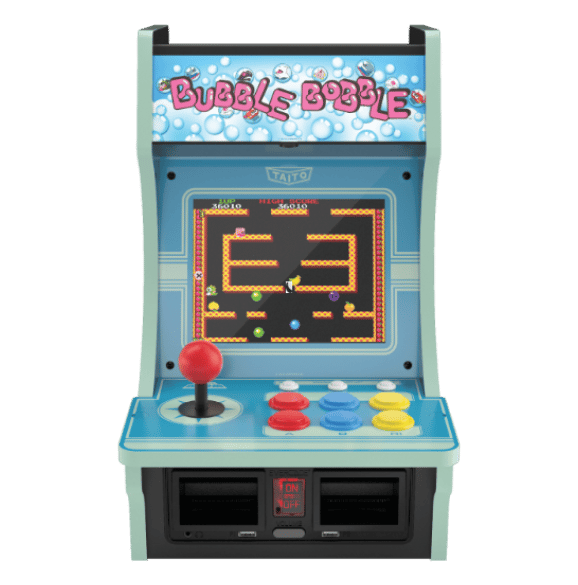
The Evercade Alpha TAITO Edition is a pint‑size, cartridge‑friendly bartop that mashes up museum‑grade nostalgia with modern convenience. You get 10 built‑in TAITO classics right out of the box, a crisp 8" 4:3 IPS display, and full‑size arcade controls—all wrapped in a Bubble Bobble‑themed shell that looks like it just rolled out of a late‑’80s game center. Better still, it plays your Evercade cartridges, so the library doesn’t stop at the pack‑ins. It’s the kind of hardware that makes historians grin and high‑score chasers reach for another credit.
The Review
Design & Feel: Big arcade energy, desk‑friendly size
Evercade’s Alpha line nails the vibe: a sturdy bartop with responsive stick and clicky buttons, a swappable light‑up marquee (Bubble Bobble/Space Invaders/Rastan included), and dual USB ports for plugging in Evercade‑compatible controllers for local multiplayer. The TAITO model keeps the series’ two cartridge slots—one on each side—so you can boot from your existing Evercade carts without digging around. On the front, the coin‑slot doubles as the power button, there’s a volume rocker, and the unit runs off USB‑C. The 8" IPS panel is bright and 4:3, with optional CRT‑style filters if you want the scanline look.
Picture‑perfect pixels
Under the glass, the screen outputs at 1024×768, which gives period art the pop it deserves. Purists may debate “too sharp vs. just right,” but paired with the punchy stereo speakers the cabinet sells the arcade fantasy. Firmware updates are handled over built‑in Wi‑Fi, so you won’t need to tether the thing to a PC for maintenance.
One big miss: no TV‑out
Like earlier Alpha models, there’s no HDMI port. If you’re dreaming of swapping the desk for the living‑room TV, you’ll need other Evercade hardware. (Argos’ listing even fields the “Can I link it to my TV?” question with a blunt “no.”)
The TAITO Ten: A short tour of the pack‑ins
The built‑in lineup reads like a TAITO mixtape: Bubble Bobble, Cadash, Elevator Action, The Fairyland Story, Growl (Runark), The Legend of Kage, The NewZealand Story, Puzzle Bobble, Rastan, and Space Invaders. That’s a tidy cross‑section of late‑’70s to mid‑’90s design—from fixed‑shooter fundamentals to co‑op platform chaos to match‑3 perfection. Highlights: Bubble Bobble still sings in two‑player, Rastan’s sword‑swinging arc feels great on a real stick, and Puzzle Bobble’s “just one more shot” rhythm is timeless.
History check: Space Invaders (1978) essentially kick‑started the arcade boom; fast‑forward to Puzzle Bobble (1994) and you can trace TAITO’s leap from shooters to global puzzle phenom—all represented here. (Wikipedia)
The Evercade Edge: Cartridges, collectability, and choice
What elevates the Alpha beyond a static mini‑cab is the Evercade ecosystem. Those twin slots take standard Evercade cartridges, immediately unlocking a 500‑plus game library across 60‑plus carts—including lots of arcade compilations. Want Data East brawlers one minute and Toaplan shmups the next? Swap a cart, not a cabinet. Controller ports on the front make two‑player painless, and the pick‑up‑and‑play menu keeps the whole experience approachable.
Launch & Availability: Where (and how) to get it
Release window & pre‑order price: The TAITO Edition was announced with a special pre‑order at £199.99 / $259.99 / €229.99, targeting a November 2025 launch. Many UK retailers list 12 November 2025 for release.
US availability: Pre‑orders went live at Amazon in the States, with the TAITO unit positioned as the third Alpha model after last year’s Mega Man and Street Fighter II cabinets.
UK/EU availability: Widely listed at outlets like Argos, HMV, and Funstock, often at the same launch window and pricing.
Regional restrictions to note: Some specialty shops restrict shipping to North America only (e.g., Songbird limits purchases to the USA/Canada), so double‑check your retailer’s region rules before you check out.
About “Deluxe” editions: In 2024 the Alpha line offered Funstock‑exclusive “Deluxe” SKUs with Sanwa parts for the Capcom‑themed models; current TAITO listings show the standard spec.
Verdict
The Evercade Alpha TAITO Edition is a charming, cartridge‑powered time machine. As a self‑contained TAITO tribute, the 10‑game lineup is solid; as a portal to the larger Evercade library, it’s outstanding. You sacrifice HDMI and a second built‑in stick, but you gain a desk‑friendly cabinet with authentic controls, swappable marquee flair, and a library that grows with your shelf. For retro fans who prize physical media and a genuine arcade feel, this is an easy recommendation; if your dream is couch co‑op on a big screen, the lack of TV‑out is a hard stop.
Developer background: Evercade is built by Blaze Entertainment, a UK team that has been expanding the cartridge‑based ecosystem from handhelds and consoles into bartops.
Series snapshot: The Alpha line debuted with Street Fighter II and Mega Man themes; TAITO is the third cab and the first to bring Bubble Bobble styling to the series.
Standout features: Swappable light‑up marquees (Bubble Bobble/Space Invaders/Rastan), twin Evercade cartridge slots, and dual USB ports for easy two‑player.
Library boost: Plug in Evercade carts to access 500+ games across 60+ cartridges—a huge advantage over fixed mini‑cabs.
Two‑minute history: Space Invaders (1978) set the table for the arcade era; Puzzle Bobble (1994) kept TAITO’s magic alive in the ’90s with match‑3 mastery.
Zelda’s Adventure DX Brings Color (and Redemption) to a Once-Forgotten Quest
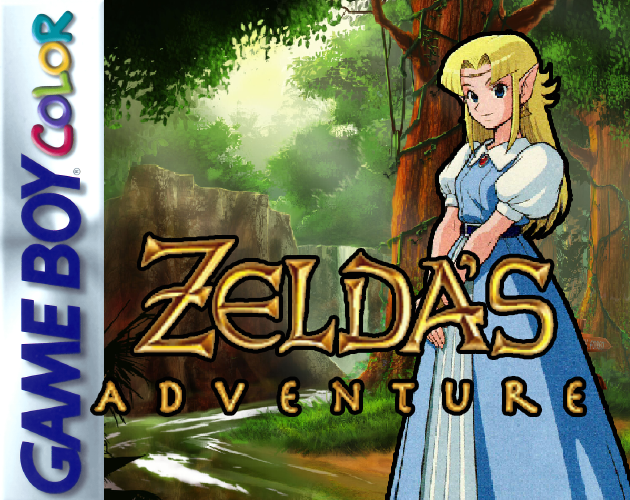
Princess Zelda’s most obscure outing just got a glow‑up. Indie developer John Lay has released Zelda’s Adventure DX, a colorized, tightened‑up update of his widely shared CD‑i‑to‑Game Boy port—turning a notorious curio into a breezy handheld adventure with fresh music, sharper combat feedback, and a proper splash of Game Boy Color style.
Why This Rules
Zelda’s Adventure DX takes the top‑down exploration and shrine‑by‑shrine structure of the original CD‑i game and reframes it in a portable package that feels right at home alongside Link’s Awakening—but with modern homebrew polish. It’s fast, readable, and, crucially, fun in a way the CD‑i release never quite managed.
The Full Story
From Cult Curio to Cart‑Ready
In the mid‑’90s, Philips published Zelda’s Adventure for the CD‑i—developed by Viridis, built around live‑action cutscenes, and widely panned despite its classic top‑down perspective. Lay’s fan project rebuilds that framework for Game Boy, adopting Link’s Awakening‑style art cues and snappier pacing while preserving the basic quest of collecting the seven celestial signs as Zelda.
Why “DX”?
The new DX release adds a full color pipeline and more. Highlights include:
Color support, new sound effects, and new music
Improved combat feedback (hit flashes, cleaner death animations)
New enemy animations (fliers cast shadows)
Engine update to GB Studio 4.1 plus quality‑of‑life bug fixes (auto‑pickups, cleaner respawns, kernel‑panic fixes)
These changes ship in v2.0.0, available as a.gbROM labeled Zeldas.Adventure.DX.v2.0.0.gb.
Launch Details & How to Play
Where to get it: Lay’s itch.io page hosts a browser build and a “name your price” download, including the DX ROM file.
Hardware & access: You can play on real Game Boy hardware via a flash cart or on emulators; the colorized features shine on Game Boy Color–class hardware. The project is, of course, unofficial.
Compatibility note: The developer has noted minor quirks on original DMG hardware as the color update beds in.
A Quick History Lesson (and a Regional Footnote)
The original Zelda’s Adventure was a European‑only commercial release on CD‑i during the console’s twilight years. That’s part of why so many fans never touched it.
CD‑i discs themselves weren’t region‑locked, so importers in North America could still play—if they had the hardware.
The Game Boy DX version inherits none of that: it’s a standard GB ROM, available worldwide.
What It Plays Like
Top‑Down, Zelda‑Led Adventure
You play as Princess Zelda, exploring overworld routes and tackling shrines that gate progression through key items and steady stat management. Think Link’s Awakening tempo, but with the CD‑i quest’s structure—now cleaner to read and navigate on a small screen.
Modernized Handheld Comforts
Combat reads better (sprite flashes when hits land), enemies pop with extra animation, and the new soundtrack/SFX set sells the vibe. Small fixes—like auto‑collecting rupees and hearts—smooth away the CD‑i cruft.
Quick Trivia
Who made DX? John Lay, an indie developer who rebuilt the game in GB Studio, with a visual style nodding to Game Boy‑era Zelda.
Release Timeline: Original CD‑i game in the mid‑’90s → Game Boy demake released in 2023 → DX color update released now.
Why “DX” sounds familiar: Nintendo used the DX label for colorized Game Boy updates like Link’s Awakening DX—a tradition this fan project emulates in spirit.
Region quirk of the original: Zelda’s Adventure shipped only in Europe, despite plans for the U.S.; discs weren’t region‑coded.
How to try it fast: There’s a play‑in‑browser version and a ROM download on itch, with the DX file clearly labeled.
The Bottom Line
If you love retro “what‑ifs,” Zelda’s Adventure DX is a rare do‑over that actually sticks the landing—smart color, better feel, and just enough quality‑of‑life tweaks to make a historically messy entry worth your time. Grab the ROM, fire up your favorite emulator (or a flash cart), and give this once‑forgotten Zelda a fair shot.
PCSX2 Hits 99.5%: The PS2 Library Is (Almost) All Playable on PC
If you grew up juggling memory cards and wrestling with SCART cables, this one’s for you. The open‑source PlayStation 2 emulator PCSX2 has crossed a generational milestone: more than 99.5% of the PS2’s catalog is now rated Playable or Perfect, with only a tiny handful of outliers still not there—think DRIV3R, Marvel Nemesis, World Series Baseball 2K3, and the online‑centric Final Fantasy XI. That’s the PS2—home to 150+ million consoles—essentially preserved and enhanced on modern hardware.

Why PCSX2 Became The Way to Revisit PS2
PCSX2 isn’t just a museum exhibit—it’s a modern way to play. Upscaling pushes classics well past their original resolutions, widescreen patches open up 4:3 worlds, and a Vulkan renderer powers the whole thing with fewer hitches and smarter performance on today’s GPUs. The 2.0 era also brought a clean, controller‑friendly UI, per‑game settings, automatic game fixes, texture replacement support, and a built‑in updater so you can spend less time tweaking and more time playing.
The Story So Far
From Homebrew Curiosity to 2.0 and Beyond
PCSX2’s roots trace back to 2001–2002, when a small team spun up a PS2 emulator that could barely boot tech demos. Ten-plus major releases later—1.0 (2012), 1.6 (2020), 2.0 (2024), 2.4 (2025)—the “un‑emulatable” Emotion Engine went from mystery box to solved homework. Today’s builds deliver a polished front end and a compatibility list that feels like a complete set.
Open Source, Open Era
PCSX2 is open‑source under the GPL, developed by a globe‑spanning volunteer team and hosted on GitHub. That openness is a big reason features like Vulkan rendering, per‑game configs, and texture replacement landed and matured so quickly.
How It Plays (and Why It’s Better)
Sharper than you remember: Crank the internal resolution; most games scale impressively, and PCSX2’s 2.0 graphics work cuts down the telltale PS2 “blend/ghost” artifacts you might remember from CRT days.
Smart fixes, fewer toggles: Automatic game fixes and per‑game profiles mean less ini‑file spelunking when you bounce from Ratchet & Clank to Ace Combat.
Future‑proof rendering: Vulkan joins OpenGL and Direct3D 12, giving you a fast, modern backend across Windows, Linux, and macOS.
Optional upgrades: Community patches bring widescreen support (and even 60fps in select titles), while texture replacement lets fans give certain games a tasteful facelift.
Media: Screenshot of the PCSX2 2.0 interface—exactly the kind of modern front end you want on a living room PC.
Launch Details: Regions, Requirements & Access
Region Reality Check
The original PS2 hardware was region‑locked (NTSC‑U/C, NTSC‑J, PAL). PCSX2 emulates the PS2’s BIOS behavior faithfully, which means:
Fast Boot typically bypasses the BIOS region check (handy for imports).
Full Boot behaves like real hardware; a mismatched BIOS and disc region can trip the lock and dump you back to the system browser.
If you’re preserving imports, keep a matching BIOS on hand or use Fast Boot when possible.
What You Need to Play
A real PS2 BIOS. PCSX2 can’t run without it, and you must dump it from your own console. The project hosts a straightforward guide for doing it legally.
Modern OS & hardware. PCSX2 2.0 and later require 64‑bit and drop Windows 7/8/8.1—Windows 10 (build 1809) or newer is the floor. Vulkan 1.3‑capable GPUs and 8–16GB RAM are recommended for the best experience; OpenGL and D3D12 are also supported.
Smarter storage. CHD disc‑image support means you can compress libraries without quality loss, saving space and keeping load times snappy.
Regional Exclusives Worth Discovering (at Last)
PCSX2’s near‑universal compatibility doesn’t just keep God of War and Gran Turismo 4 alive—it opens doors to games many of us never had in our region:
Namco × Capcom (2005, PS2): A tactical crossover that never left Japan.
Dragon Quest V (PS2 Remake, 2004): Japan‑only on PS2; the West didn’t see it until the DS remake.
Shadow Tower Abyss (2003): FromSoftware’s cult dungeon‑crawler, JP‑only; an English release was canceled.
Michigan: Report from Hell (2005): Europe and Japan got this oddball Grasshopper horror; North America did not.
Cowboy Bebop: Tsuioku no Serenade (2005): Japan‑only back then; a quality fan translation finally rolled in 2025.
The “99.5%” Moment
As of this fall, the PCSX2 compatibility board shows Playable + Perfect breaking the 99.5% mark (disregarding regional duplicates), with just four titles not yet in playable shape. It’s a preservation headline as much as a performance one, and a testament to years of steady dev work and community testing.
Quick Trivia
First public release: March 23, 2002. The road from “boots a demo” to “nearly everything” took two decades of iteration.
Big version beats: 1.0 (2012), 1.6 (2020), 2.0 (2024), 2.4 (2025).
Legal must‑know: The BIOS isn’t bundled; you dump it from your own PS2. PCSX2 is GPL‑licensed open source.
Quality‑of‑life wins: Per‑game settings, Big Picture Mode, automatic updater, Vulkan rendering, integrated widescreen patches and texture replacement.
Gran Turismo 4 nerd note: The team literally chased down NaN/Infinity quirks to keep Polyphony’s physics happy. That’s the level of fix you feel on the track.
Final Save
If it’s been years since you piloted a Wyvern through Ace Combat 04 or pulled off a clutch parry in DMC3, PCSX2 just made it easier—and better—than ever to revisit the era. We’ll be back next issue with more deep‑cut revivals and homebrew hits.

The best HR advice comes from those in the trenches. That’s what this is: real-world HR insights delivered in a newsletter from Hebba Youssef, a Chief People Officer who’s been there. Practical, real strategies with a dash of humor. Because HR shouldn’t be thankless—and you shouldn’t be alone in it.
Reply